
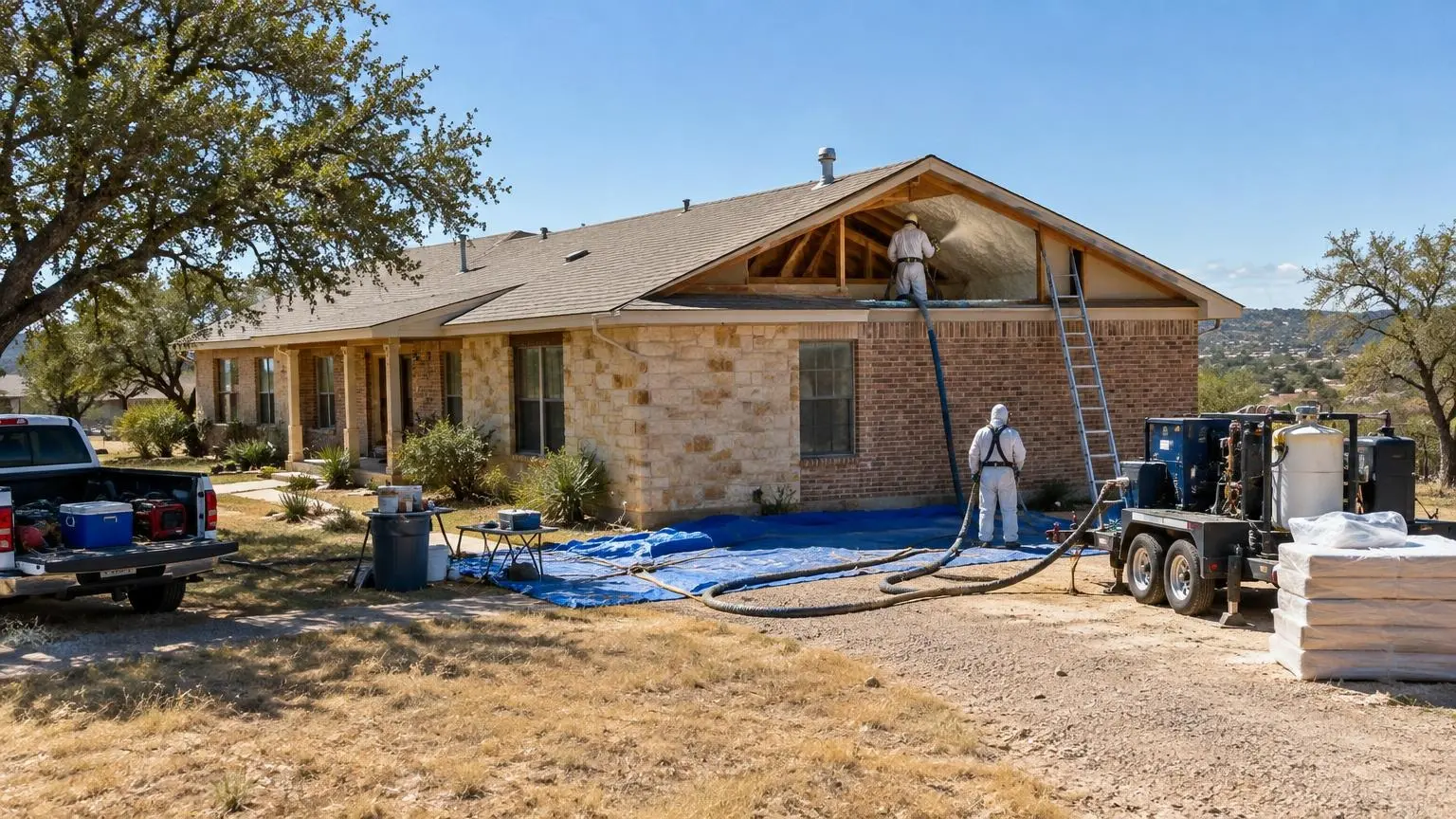
Fiberglass and cellulose
Blown-In Insulation in San Angelo, TX
A fast, affordable way to bring a sealed attic up to the depth it should have.
- Free estimates after an on-site look
- Written quotes that name foam type, thickness and R-value
- Attic leaks, ducts and old insulation checked before we cover anything
The Most Insulation per Dollar
Blown-in insulation is how most San Angelo attics reach a solid R-value without the cost of foam. A machine blows loose fiberglass or cellulose through a hose, and it settles into an even blanket across the attic floor, filling around joists, wires and fixtures in a way that batts cannot. Done after the ceiling is sealed, it gives a lot of performance for the money.
Fiberglass or cellulose
Loose-fill fiberglass is light, does not absorb much water, and does not settle much over time. Cellulose is made from recycled paper treated with fire retardant; it is denser, fills small gaps well and slows air movement through the layer a bit more. Both work well in a sealed attic. Fixr lists blown fiberglass at $1.65 to $2.60 per square foot and cellulose at $1.75 to $3.80. We recommend one or the other based on your attic and any existing material.
How deep to go
Tom Green County is in Climate Zone 3. ENERGY STAR suggests R-49 for an attic with no insulation and adding R-38 if three to four inches are already there, and the 2015 code Texas uses lists R-38 for new ceilings. Each product's bag chart converts that R-value to an installed depth, and we set depth markers across the attic so you can see that the depth on the quote is the depth you got.
Seal first
Loose fill slows heat but lets air pass through it. If the ceiling below has open chases, gaps at the top plates and unsealed light fixtures, house air keeps moving into the attic right through the new insulation. That is why every blown-in job we quote starts with air sealing. It also keeps dust from those gaps out of the rooms below.
Walls and enclosed spaces
Blown insulation also goes into closed wall cavities in older homes and into enclosed floor or ceiling spaces that cannot be reached any other way. In walls it is dense-packed so it will not settle and leave a gap at the top.
Topping up an existing attic
If the insulation already in your attic is dry, clean and mostly even, new loose fill can go right on top. If it is wet, stained, packed down by foot traffic or mixed with rodent droppings, it is better to remove it first. We tell you which you have during the visit.
Blown-in is usually a one-day job for an attic. Call or send the form to get a written quote. Get a free estimate
What Blown-In Covers
Where we use loose-fill insulation.
Attic floors
Blown to R-38 or R-49 across the whole attic after air sealing.
Top-ups
Adding depth over existing dry insulation.
Closed walls
Dense-pack fill through small holes in older homes.
Enclosed floors and ceilings
Filling spaces that are not reachable for batts.
Depth markers
Rulers set across the attic so depth is easy to check.
Eave baffles
Keeping soffit vents open when insulation gets deeper.
Published Blown-In Insulation Costs
| Job | Range and source |
|---|---|
| Blown-in, per sq ft | $1.00 to $2.80 (HomeGuide); $1.65 to $3.80 (Fixr) |
| Blown-in, attic | $900 to $3,600 (HomeGuide); $1,750 to $5,500 for about 1,500 sq ft (Fixr) |
| Blown-in, exterior walls | $1,900 to $7,800, $1.10 to $3.70 per sq ft (HomeGuide); $2,000 to $4,000 (Fixr) |
| Dense-pack cellulose | $1.60 to $4.20 per sq ft (HomeGuide) |
| Fiberglass / cellulose | $1.65 to $2.60 / $1.75 to $3.80 per sq ft (Fixr) |
| Typical blown-in job | $800 to $3,000 (HomeGuide); $3,000 to $7,000 (Fixr) |
National ranges from HomeGuide (November 2025) and Fixr (August 2025). Attic size, depth, access, air sealing and any removal set your total. The written estimate we give you after the visit is the price.
How a Blown-In Job Goes
1. Measure
We check the current depth and condition and measure the attic.
2. Quote
Material, target R-value, depth and price in writing.
3. Seal
Ceiling gaps and penetrations sealed and the hatch weatherstripped.
4. Blow
Insulation blown evenly to depth, with baffles at the eaves.
5. Verify
Depth markers checked and the attic left clean.
Why Choose Us for Blown-In Insulation
Sealing included
We do not blow insulation over open gaps.
Depth you can check
Markers show the installed depth.
Honest about old material
We tell you whether to top up or remove first.
Blown-In Insulation Questions
Is blown-in insulation better than batts?
In an attic, usually yes. It fills around obstructions and leaves fewer gaps than batts cut to fit.
Does blown-in settle?
Cellulose settles somewhat, and the depth is set to allow for that. Fiberglass settles very little.
Can blown-in go over old insulation?
Yes, if the old insulation is dry and clean. Wet or contaminated material should come out first.
How long does it take?
Most attics are done in a day, including air sealing.
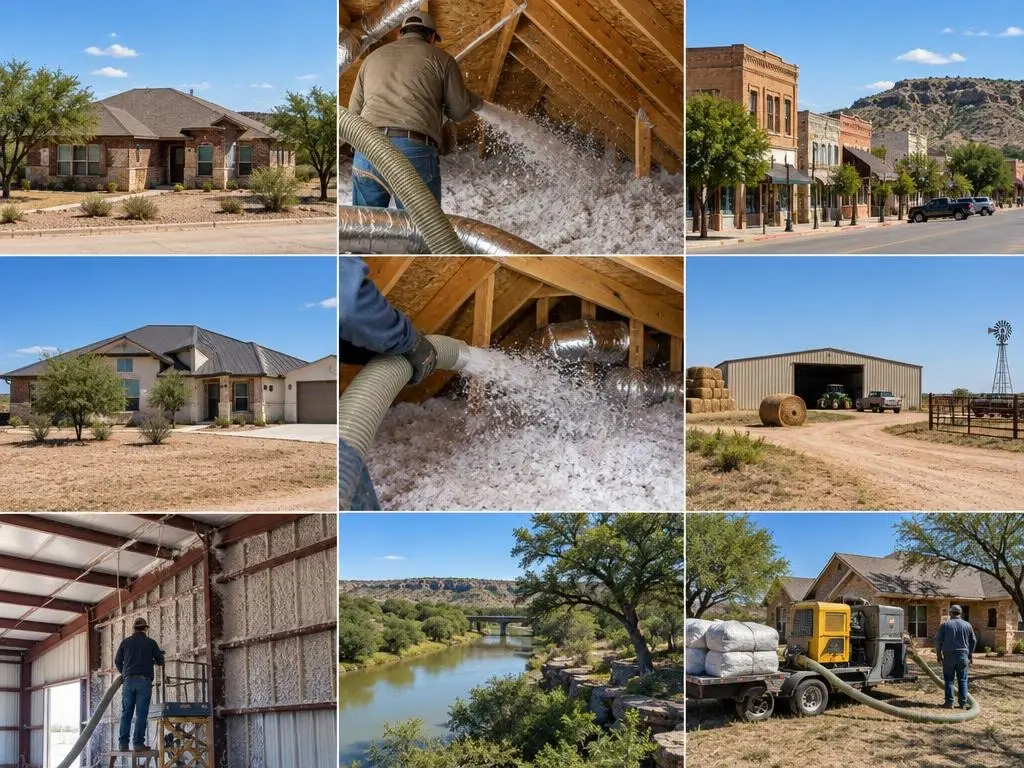
Blown-In Insulation Service Areas
- Spray Foam Insulation in San Angelo, TX
- Spray Foam Insulation in Grape Creek, TX
- Spray Foam Insulation in Wall, TX
- Spray Foam Insulation in Christoval, TX
- Spray Foam Insulation in Water Valley, TX
- Spray Foam Insulation in Miles, TX
- Spray Foam Insulation in Ballinger, TX
- Spray Foam Insulation in Robert Lee, TX
- Spray Foam Insulation in Bronte, TX
- Spray Foam Insulation in Mertzon, TX
- Spray Foam Insulation in Paint Rock, TX
- Spray Foam Insulation in Sterling City, TX
Get a Blown-In Insulation Estimate
Get a written quote for blown-in insulation in your attic or walls.